- Excavation director
- Assoc. Prof. Dr. Eylem Özdoğan
- Institution
- Istanbul University
- Fieldwork since
- 2021
- Framework
- Taş Tepeler project (Ministry of Culture & Tourism)
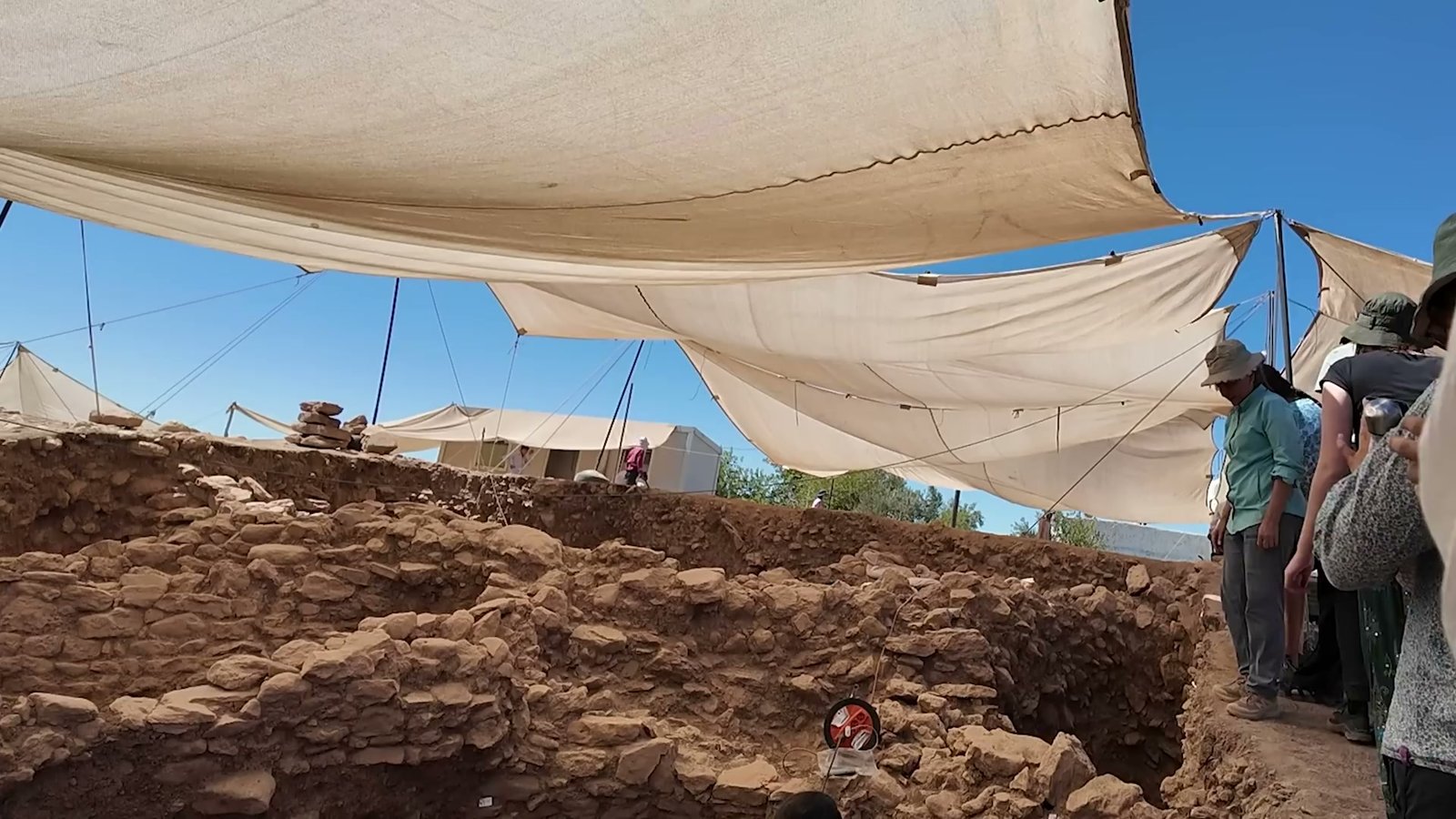
Systematic excavation at Sayburç began in 2021 under Assoc. Prof. Dr. Eylem Özdoğan, a prehistorian in the Archaeology Department (Prehistory Section) of Istanbul University. It was her 2022 paper in the peer-reviewed journal Antiquity that introduced the narrative relief to the world and framed Sayburç as a settlement where symbolic and everyday life sit side by side.
Eylem Özdoğan
Özdoğan directs the Sayburç dig and is the lead author of its key publications. Her consistent message is one of caution and context: that the images and objects at Sayburç must be read through their archaeological setting, and that isolated finds should not be spun into sensational myths. That discipline is the standard we try to hold on this site.
The Taş Tepeler framework
Sayburç is one site within Taş Tepeler ("the Stone Hills"), a large research program run by Türkiye's Ministry of Culture and Tourism that unites a dozen Neolithic sites across Şanlıurfa — from Göbekli Tepe and Karahan Tepe to Sefertepe, Çakmaktepe and Sayburç. The program's overall scientific coordinator is Prof. Dr. Necmi Karul of Istanbul University, who also directs Karahan Tepe. Individual sites, including Sayburç, are led by their own directors within this shared framework.
The published record
What we publish here is anchored to the academic and reported record, not to speculation:
- Özdoğan, E. (2022) — "The Sayburç reliefs: a narrative scene from the Neolithic," Antiquity 96(390). The foundational description of the relief.
- Özdoğan, E. (2024/2025) — further reporting on the settlement's structures and finds.
- Tok, K. (2024) — a graduate thesis on spatial analysis of the Sayburç settlement.
- Karul, N. (2021) — context on the wider Taş Tepeler / Göbeklitepe-culture horizon.
- Press & institutional reporting (2022–2025) — Antiquity/Cambridge, Archaeology.org, Türkiye Today, Hürriyet, Arkeonews, Daily Sabah.
How we handle facts and images
We separate what is established from what is interpreted, and we say when something is a research lead rather than a settled result. Our images are photographs, credited to their source, and we clearly label anything that isn't one. Where we get something wrong, we correct it and note the change.
Sources
- Özdoğan, E. 2022. Antiquity 96(390). Cambridge Core
- Eylem Özdoğan — research profile, Istanbul University. ResearchGate
- Daily Sabah, "T-shaped stones unearthed in Neolithic Türkiye settlement." link