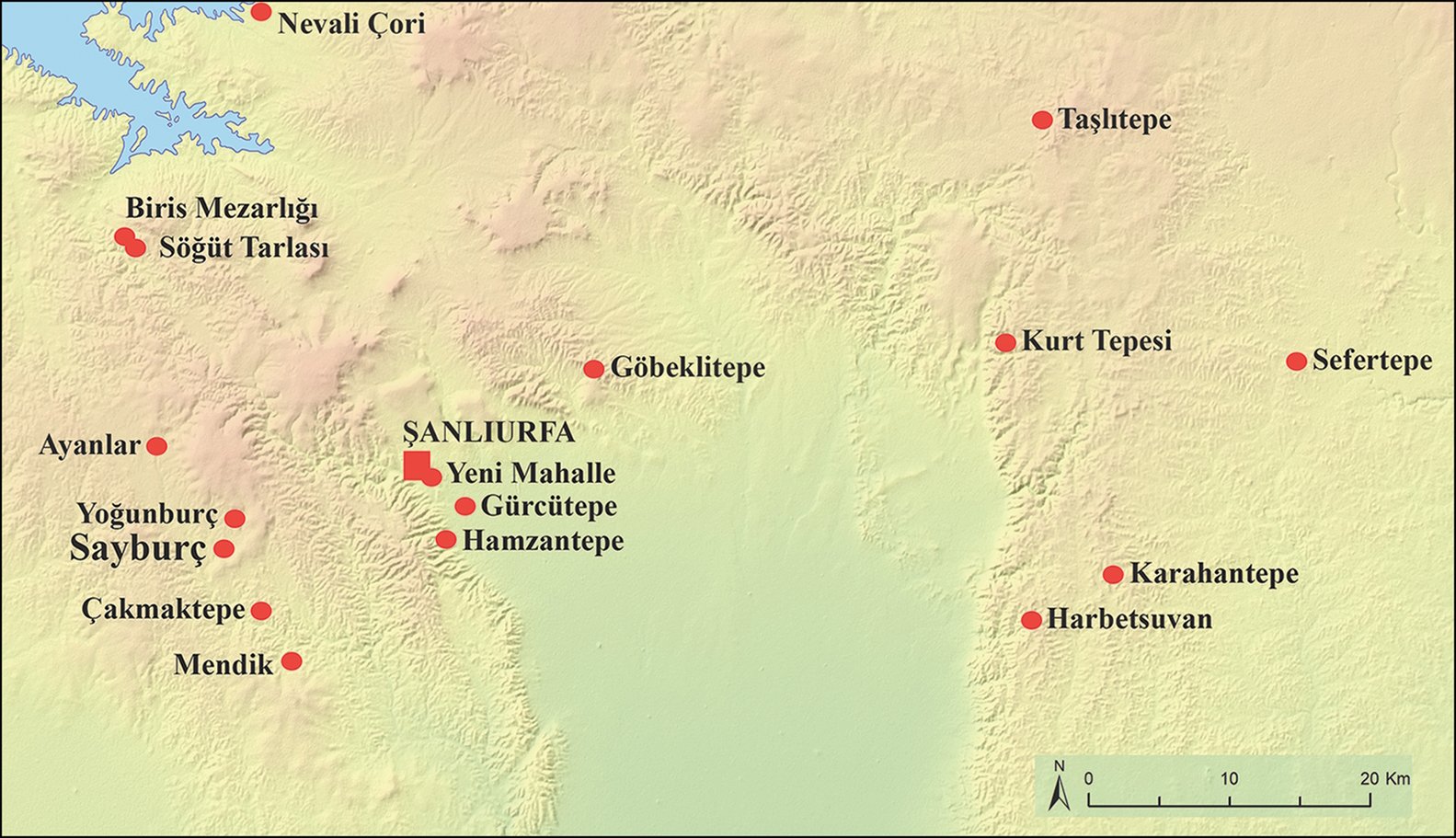
Taş Tepeler (Turkish for "Stone Hills" or "Stone Mounds") is the name of both a landscape and a research program. Since 2020, Türkiye's Ministry of Culture and Tourism has united a dozen Neolithic sites across the Şanlıurfa region under one scientific vision, coordinated by Prof. Dr. Necmi Karul. Together these sites record one of the great turning points in human history: the shift from mobile hunter-gatherers to settled communities, around eleven to twelve thousand years ago.
One culture, many hills
These sites share a language of symbols — the T-shaped pillars, the leopards and bulls, the human forms and the V-shaped necklace — that repeats across the region for nearly two thousand years. They are not identical: Göbekli Tepe is monumental, Karahan Tepe is carved into bedrock, and Sayburç is a village with a story on its wall. But they belong together, and they are best understood together.
Where Sayburç fits
Sayburç adds something the others don't: narrative. Its five-figure relief is the earliest known scene — figures arranged to tell, not just to depict. And because that relief sits inside a lived-in settlement, Sayburç shows the symbolic world woven directly into daily life. It is the place where the Taş Tepeler story becomes a story.
The sites
We're building the English-language home for each of these hills. Explore the network:
Göbekli Tepe — the most famous of them all, the world's first temple — anchors the region, and every site here speaks to it.
Sources
- Ministry of Culture and Tourism — Taş Tepeler project (from 2020; coordinator Necmi Karul).
- News Central Asia, "Taş Tepeler Project Marks Five Years of Rewriting Human History" (2025). link
- Karul, N. 2021 — Karahan Tepe and the Göbeklitepe-culture horizon.